

If your neck feels stiff by midday, tight by evening, and heavy by the time you try to sleep — you’re not alone.
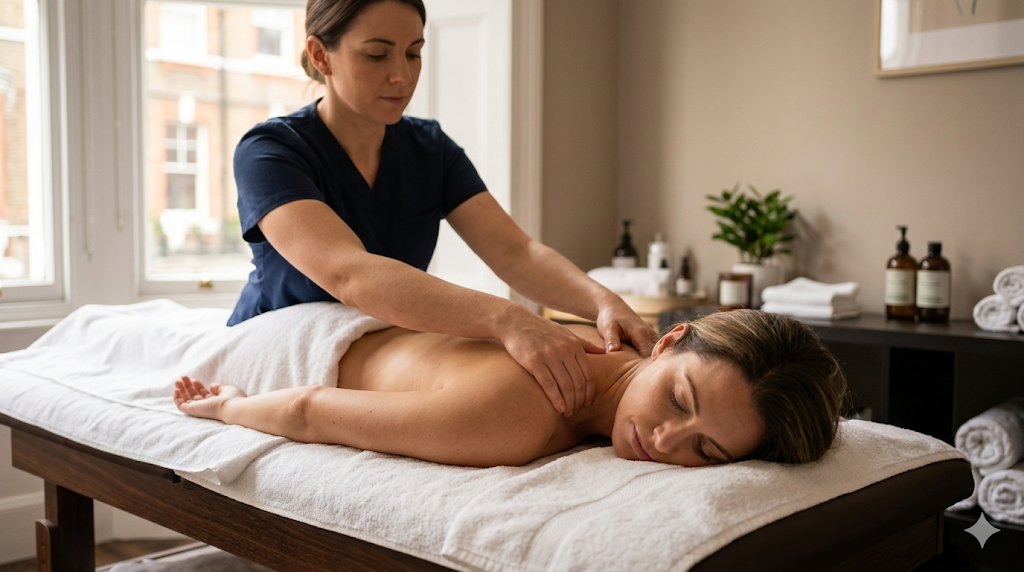
This is one of the most common patterns I see every day in my treatment room in Central London.
For many people, it starts subtly. A slight restriction when turning the head. A dull ache after a long day at the laptop. A feeling that the shoulders are constantly “carrying something.” Then gradually, it spreads — into the shoulders, into the base of the skull, sometimes even into the jaw or head.
And before you realise it, it begins to affect how you work, how you sleep, and how you feel day to day.
The good news is that neck pain is very rarely random. In most cases, it follows clear, recognisable patterns — and when those patterns are addressed properly, the body responds well.
Why Neck Pain Is So Common in London
London lifestyle puts constant demand on the neck and shoulders.
Long hours at a desk. Commuting. Stress. Looking down at phones. Rushing between places without much recovery time. All of this encourages the body to hold tension in the upper back, shoulders, and base of the skull.
Most clients I see describe very similar symptoms:
- a dull ache through the neck
- stiffness when turning the head
- pulling into the shoulders
- pressure at the base of the skull
- headaches linked with neck tension
- jaw tightness or clenching
- discomfort that worsens after work or poor sleep
If this sounds familiar, it usually isn’t just one issue — it’s a pattern that has built up over time.
What’s Really Causing Your Neck Pain?
Neck pain is rarely caused by a single problem. More often, it’s the result of how the body has adapted to daily habits, posture, and stress.
1. Forward Head Position
When the head moves forward — even slightly — the load on the neck increases significantly.
Over time, this creates tension around the base of the skull, tightness in the upper trapezius, and fatigue in the muscles that are meant to stabilise the neck.
This is one of the most common patterns I see in desk-based professionals.
2. Stress and Nervous System Overload
Stress doesn’t just affect the mind — it shows up physically.
Many people unconsciously lift their shoulders, tighten their jaw, or brace through the neck when under pressure. When this becomes constant, the body never fully switches off.
This is why neck tension often feels worse during busy or emotionally demanding periods.
3. Desk Work and Screen Time
Spending hours on a laptop or phone creates imbalance:
- some muscles become tight and overused
- others become weak and underactive
This imbalance often leads to stiffness, reduced movement, headaches, and that familiar feeling that the neck never truly relaxes.
Poor posture over long periods is a well-recognised contributor to neck pain.
4. Jaw Tension and Clenching
The jaw, neck, and shoulders are closely connected.
If you clench your teeth, grind at night, or hold tension in your face, it often feeds directly into the neck — especially around the base of the skull and sides of the neck.
5. Sleep Position and Pillow Setup
Sometimes the issue isn’t the day — it’s the night.
An unsuitable pillow height or awkward sleeping position can hold the neck in a strained position for hours, leading to stiffness and reduced mobility in the morning.
The NHS recognises sleep position as a common contributing factor to neck pain.
How Massage Can Help Neck Pain
A good massage for neck pain isn’t just about “working harder” on tight muscles.
The aim is to:
- reduce unnecessary muscle tension
- improve movement and comfort
- help the nervous system settle
From both experience and available research, manual therapy and soft tissue work can support improvements in pain and function — particularly when combined with simple changes in movement and daily habits.
It’s not a quick fix or something magical. But when done properly and consistently, it can make a very noticeable difference.
The Most Effective Massage Treatments for Neck Pain
Over the years, I’ve found that different types of neck pain respond best to different approaches.
Deep Tissue Massage for Neck Pain
This is often the most effective option when the neck feels tight, heavy, and restricted.
It’s particularly useful for:
- persistent upper trapezius tightness
- desk-related tension
- commuting-related stiffness
- reduced neck mobility
- pressure building into the shoulders or base of the skull
I rarely work on the neck alone. Releasing the shoulders, upper back, and often the chest muscles is essential to change the overall pattern.
Best for: ongoing tension, desk workers, upper body overload.
Sports Massage for Neck and Shoulder Mobility
When the issue is more about restriction than just tightness, sports massage works very well.
Sessions may include:
- soft tissue techniques
- targeted stretching
- myofascial work
- mobility-focused treatment
This is ideal for clients who feel “stuck” or limited in movement rather than simply sore.
Best for: reduced mobility, gym-related stiffness, postural imbalance.
Indian Head Massage for Stress-Related Neck Tension
This treatment focuses on the scalp, temples, neck, and shoulders.
It’s particularly effective when stress is a major factor — especially for clients who experience:
- head pressure
- jaw tightness
- tension around the temples
- difficulty switching off
Many people notice a calming effect quite quickly with this approach.
Best for: stress-related patterns, busy professionals, head and jaw tension.
Personalised Massage
Most clients don’t fit into just one category.
If your symptoms include a mix of neck pain, shoulder tightness, headaches, and jaw tension, a personalised session is often the most effective option.
This allows me to combine techniques depending on what your body needs — whether that’s deeper work, mobility-focused treatment, or more calming, nervous-system-based work.
Best for: recurring or mixed symptoms, tailored treatment.
How Many Sessions Might You Need?
This is one of the most common questions — and the honest answer is: it depends on the pattern.
What I typically see:
- Mild, recent stiffness
Often improves noticeably after one session, especially if the cause is temporary (e.g. travel or poor sleep) - Moderate, ongoing tension
Usually benefits from 2–4 sessions spaced over a few weeks to properly shift the pattern - Long-standing or recurring pain
Often needs a more consistent approach, with treatment combined with small daily changes - Maintenance
Many desk-based clients choose regular sessions (e.g. every 3–6 weeks) to prevent build-up rather than waiting for pain to return
If the same tension keeps coming back, it’s rarely because treatment “didn’t work” — it’s usually because the original cause is still there.
That’s where combining treatment with simple adjustments becomes important.
What You Can Do at Home
You don’t need a complicated routine — consistency matters more than intensity.
What tends to help most:
- keep your screen at eye level where possible
- avoid long periods looking down at your phone
- take short movement breaks every 30–60 minutes
- gently move the neck throughout the day (not just stretch once)
- use heat on tight muscles if they feel heavy or restricted
- check your pillow height — your neck should feel supported, not pushed forward or dropped
One of the biggest mistakes I see is people trying to “fix everything at once.”
Small, regular changes are far more effective.
NHS guidance also supports staying active, avoiding prolonged static positions, and checking sleep setup.
When You Should Get Checked
Massage works very well for muscular tension, but some symptoms need medical assessment.
You should seek advice if your neck pain:
- does not improve after a few weeks
- travels into the arm
- includes pins and needles, numbness, or weakness
- follows an injury
- is severe or getting worse
- regularly affects sleep
These align with NHS guidance on when further investigation is needed.
Book a Neck Pain Massage in Central London
If your neck feels constantly tight, heavy, or restricted, you don’t have to wait until it becomes worse.
I offer personalised massage treatments in Central London, focused on the patterns I see every day — desk work, stress, travel, and upper body overload.
Each session is adapted to what your body needs at that moment, rather than following a fixed routine.
If you’re not sure which treatment to choose, a personalised session is often the best place to start.
London Massage 4U
Golden Cross House, 8 Duncannon Street, 2nd Floor, Room 203, WC2N 4JF
Charing Cross / near Trafalgar Square
+44 7786 971943
www.londonmassage4u.co.uk
Book online and choose the treatment that feels right for you.
You Might Also Be Interested In
If you’re experiencing neck pain, you may also benefit from treatments that focus on related areas and patterns:
- Deep Tissue Massage in Central London
Ideal if your tension extends into the shoulders and upper back or feels deep and persistent. - Sports Massage for Mobility and Posture
Useful if your neck feels restricted, stiff, or affected by gym training or posture. - Indian Head Massage for Stress and Head Tension
A good option if your symptoms include headaches, jaw tightness, or difficulty switching off. - Personalised Massage Treatments
Recommended if your symptoms overlap and you’re not sure which treatment is right.
Each treatment can be tailored depending on how your body presents on the day.