
Headaches are one of the most common reasons people look for hands-on treatment.
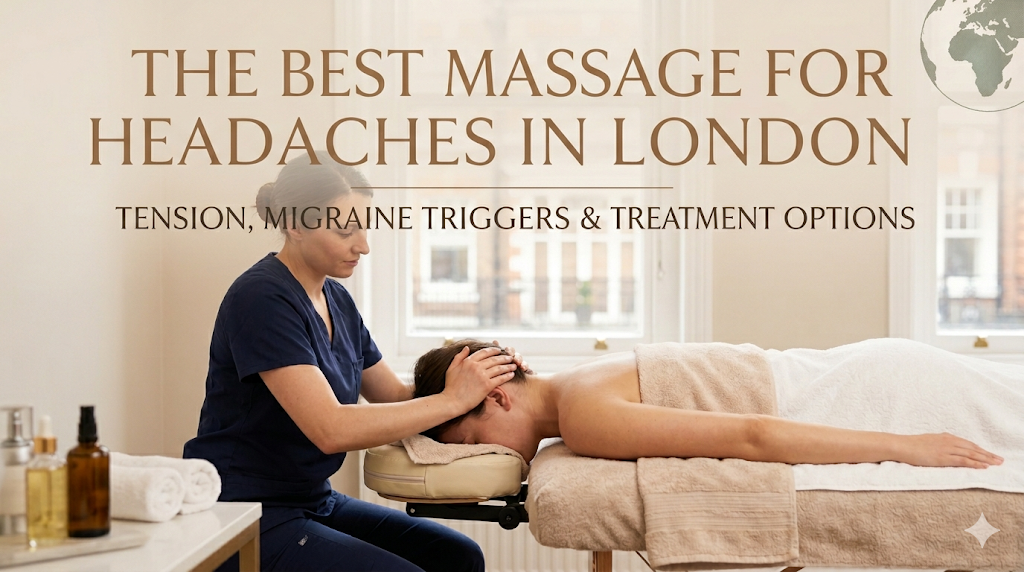
In my Central London treatment room, I regularly see clients who describe pressure behind the eyes, heaviness at the back of the head, tightness through the neck and shoulders, temple discomfort, jaw tension, or a band-like feeling across the forehead. Sometimes the pain builds gradually after long hours at a desk, poor sleep, travel, stress or too much screen time. Other times it feels much more intense, with throbbing pain, nausea, sensitivity to light or sound, or visual symptoms that suggest something closer to migraine.
That difference matters.
Not every headache is the same, and the best treatment depends on what is really driving your symptoms. If you are searching for headache massage in London, it is important to know where massage may help, where it has limits, and when medical advice should come first.
Headaches and Migraine Are Not the Same Thing
This is the most important distinction.
A tension-type headache is usually described as a pressing or tightening pain. Many people say it feels like a tight band or vice around the head. It is often felt on both sides, tends to be mild to moderate rather than severe, and usually does not come with the more classic migraine features such as strong nausea or marked sensitivity to light and noise.
Migraine is different. Migraine is a neurological condition. It can cause moderate to severe throbbing pain, often with nausea, vomiting, and sensitivity to light or sound. Some people also experience aura, such as visual disturbance, pins and needles, or speech symptoms. Migraine may affect one side of the head or both.
That is why I never assume that someone who says they have a migraine is “just tense”.
Some people do have tension-type headaches or neck-related headaches that are strongly linked to posture, jaw clenching and muscular overload. But many people genuinely have migraine, and they need advice that respects that difference. Massage can be supportive in the right context, but it should never be described as though it directly treats or fixes migraine itself.
Why Headaches Are So Common in London
For many people living and working in London, headache patterns are not random.
Long desk hours, commuting, stress, shallow breathing, poor sleep, screen use, missed meals and dehydration all create the kind of physical and mental load that can build through the neck, jaw, shoulders and upper back. I see this constantly in people who work at laptops all day, rush between meetings, spend hours looking down at phones, or hold tension without realising it.
A lot of clients arrive saying things like:
“I feel pressure behind my eyes by the afternoon.”
“My temples feel tight when I’ve been working all day.”
“My shoulders are always up.”
“I wake up clenching my jaw.”
“My head feels heavy, but I can’t switch off.”
In many of these cases, the headache is part of a wider pattern involving posture, stress, neck stiffness, jaw tension and upper body overload.
When Muscle Tension Is Part of the Picture
Even though migraine is neurological, muscle tension can still be relevant.
Poor posture, prolonged desk work, stress, anger, jaw clenching, tightness through the upper back, neck and scalp, and teeth grinding can all contribute to headache patterns. When the muscles around the neck and shoulders stay loaded for too long, they often begin to pull tension upwards. That can create pressure at the base of the skull, tightness in the temples, scalp tenderness, forehead tension, or discomfort through the jaw.
This is where massage for tension headaches may be genuinely useful.
If your headaches seem closely linked to neck stiffness, shoulder tension, clenching, stress or staying in one position for too long, then hands-on treatment may help reduce the muscular part of the problem. That does not mean massage is a cure. It means it may help ease tension in the areas that are clearly contributing to how you feel.
It is also worth being honest about migraine. Some people with migraine notice neck pain at the beginning of an attack, and some find head and neck massage soothing when muscle tension is also present. But that does not mean massage works for everyone, and it should not replace proper assessment when symptoms suggest migraine or another medical cause.
Common Headache Patterns I See in Clinic
1. Tension headaches linked to neck and shoulder overload
This is one of the most common patterns I see in Central London.
The pain often starts as heaviness or tightness through the neck, upper shoulders or base of the skull, then spreads upward. Some clients feel a band-like pressure around the forehead. Others notice temple tightness, scalp sensitivity, jaw ache or a dull, pressing feeling across the head.
These headaches often flare after:
- long hours at a computer
- poor desk posture
- commuting
- poor sleep
- stress
- jaw clenching
- carrying tension in the upper body
- staying in one position for too long
2. Jaw-related headache patterns
Some headaches are strongly linked to clenching, grinding or tension through the jaw and face.
These clients often describe temple pain, pressure behind the eyes, tenderness through the cheeks, or pain that moves between the jaw, temples and neck. Morning symptoms are especially common in people who grind their teeth at night.
In this type of pattern, treatment often needs to consider the jaw, temples, neck and shoulders together rather than treating the head in isolation.
3. Migraine-type symptoms
Migraine usually feels different.
Clients may describe throbbing pain, nausea, vomiting, sensitivity to light, sensitivity to sound, aura, or the need to lie down in a dark room. Migraine may be triggered by stress, sleep disruption, hormones, dehydration, bright light or missed meals. Often it is not one single trigger, but a combination of factors building together.
If your symptoms sound more like this, it is important not to reduce the whole picture to “tight muscles”. Muscle tension may still be present, but migraine is more than that.
When to Seek Medical Advice Urgently
A massage clinic should never treat headache as routine when warning signs are present.
You should get urgent medical help or call 999 if a headache comes on suddenly and is extremely painful, or if it comes with symptoms such as:
- sudden severe headache unlike usual headaches
- vision loss or double vision
- confusion
- unusual drowsiness
- weakness on one side
- seizures
- symptoms that could suggest meningitis
- headache after a head injury
Urgent assessment is also important if a severe headache comes with jaw pain when eating, a sore scalp, blurred vision or double vision.
You should see a GP if headaches keep coming back, are getting worse, painkillers are not helping, migraine attacks are frequent, or the symptoms are affecting normal life.
A headache diary can also be very useful. It often helps identify patterns involving stress, hormones, food, hydration, sleep, screen time or posture.
How Massage May Help With Headaches
Massage may help by easing muscle tension in the neck, scalp, jaw, shoulders and upper back, helping you feel less tight, less guarded and more physically comfortable.
For clients whose headaches are strongly linked with desk posture, clenching, stress-related shoulder tension or neck stiffness, that can be valuable. In those cases, the goal is not to claim that massage “treats migraine” or “cures headaches”. The goal is to reduce the musculoskeletal overload that may be contributing to the pattern.
This is how I think about headache massage in London in a clinically honest way:
- it may help ease tightness around the neck, shoulders, jaw and scalp
- it may help you feel less braced and overloaded
- it may support relaxation when stress is part of the pattern
- it may be helpful as part of a wider self-management plan
But massage is not a substitute for diagnosis when symptoms suggest migraine or another medical cause.
The Best Types of Massage for Headaches in London
When someone searches for massage for migraines in London or massage for tension headaches, the most appropriate treatment depends on how the symptoms present.
Indian Head Massage London
Indian Head Massage can be a very good option for clients who feel overloaded through the scalp, temples, neck and shoulders. It suits people who feel mentally fatigued, tight through the upper body, or heavy around the head and neck.
It is often a sensible choice when stress, tension and poor sleep are part of the picture, especially if the symptoms are not dominated by severe migraine features.
Deep Tissue Massage for Neck and Shoulder Tension
Deep tissue massage usually makes the most sense when the main issue is muscular overload through the neck, upper trapezius, levator scapulae, shoulders and upper back.
This is common in desk workers, commuters, people who travel frequently, and clients who carry stress physically. If the headache pattern seems to start in the neck and climb upward, this approach is often more logical than focusing only on the head itself.
Face Massage for Jaw and Temple Tension
Face massage or lifting massage can be particularly useful for people who hold a lot of tension through the jaw, temples and facial muscles.
If you clench, grind your teeth, wake with a tight jaw, or feel pain spreading from the face into the temples and neck, this can be a helpful part of treatment. In many cases, the jaw is being overlooked even though it is clearly contributing to the headache pattern.
Personalised Massage
This is often the strongest option of all.
Most headache clients do not present with one isolated issue. They usually have a mix of neck tension, stress, jaw tightness, poor posture, fatigue and upper body overload. That is why a personalised massage often makes the most sense. It allows me to focus on the scalp, temples, jaw, neck, shoulders and upper back according to what is actually happening on the day, rather than forcing the treatment into a single template.
Simple Self-Care That Often Helps
Massage can be useful, but it works best when it sits alongside practical self-care.
Simple measures that often help include:
- staying hydrated
- eating regularly
- keeping a headache diary
- identifying triggers
- managing stress where possible
- maintaining more consistent sleep
- avoiding very long periods in one position
- taking movement breaks from screens
- using gentle stretching where appropriate
- trying heat packs around the neck and shoulders
- getting some fresh air
- slowing breathing when stress is high
These basics are easy to underestimate, but in real life they matter a great deal.
Who Typically Books This Kind of Treatment?
The people most likely to benefit from a musculoskeletal approach are often those whose headaches are closely linked with everyday strain.
That includes:
- desk workers
- people under high stress
- commuters
- people who use screens heavily
- clients who clench their jaw
- people who carry tension in the upper traps and neck
- those who feel head heaviness after long workdays
- clients whose symptoms worsen with posture, poor sleep or prolonged sitting
This is why headache massage in Central London is often less about the head alone and more about the whole tension pattern around it.
Book a Headache Massage in Central London
If your headaches seem closely linked with neck tension, shoulder tightness, jaw clenching, stress or long hours at a desk, I offer personalised massage treatments in Central London tailored to the areas that often become overloaded.
Depending on your symptoms, treatment may focus on the scalp, temples, jaw, neck, shoulders and upper back. If your symptoms sound more like migraine, or include any warning signs, medical assessment should come first.
If you are looking for a thoughtful, clinically honest approach to headache massage in London, massage for tension headaches, Indian head massage London, or supportive Central London massage for neck and jaw tension, you are welcome to book with me.
London Massage 4U
Golden Cross House, 8 Duncannon Street, 2nd Floor, Room 203, WC2N 4JF
Near Charing Cross / Trafalgar Square, Central London
Phone: +44 7786 971943
Website: www.londonmassage4u.co.uk